
"political impact on coffee"
300 article(s) found

Introduction of Salvadoran Coffee flavors El Salvador Coffee characteristics El Salvador
El Salvador, a name that may not be very familiar to coffee lovers, is beginning to emerge quietly in the world of boutique coffee (Specialty Cxxx). El Salvador, a beautiful small country with volcanoes, is the smallest country in Central America, with an area of only more than 20, 000 square kilometers and a population of 5.6 million.
Beans from Burundi and Rwanda smell like potatoes?
Following Cafe Review (Wechat official account vdailycom) found that Beautiful Cafe opened a small shop of its own. Coffee production is mainly concentrated in Africa, Asia and the Americas. Other states also have, that is, their scale and output are slightly smaller. Among them, there are seven major producing areas in Africa. Today, Lao WA recorded producing areas in Burundi and neighboring Rwanda. Some people say that both producing areas have a share of coffee beans.

Introduction to Cedar Motad Manor Coffee with suitable mellowness and Fine Coffee
In July 1991, EGF hosted a national conference with the participation of more than 20 political and ethnic organizations. The meeting adopted the Transitional Charter and elected an 87-member House of Representatives, with EGF Chairman Meles Zenawi as President of the Transitional Government and President of the House of Representatives. A transitional government was established. On May 24, 1993, Eritrea (formerly the province of Eritrea, Ethiopia) adopted

Introduction of high-quality coffee with rich and unique aroma in Bolivian coffee manor
In 1932, the Chaco War broke out between Bolivia and Paraguay for oil resources in the North Chaco region. Bolivia was defeated and lost a large area of territory. The people's armed uprising broke out in April 1952, and Paisdensolo, leader of the nationalist revolutionary movement, became president. Since then, there have been frequent military coups and long-term political instability. Modern assets with South American characteristics were restored in October 1983

Where does the word coffee come from? what was the early role of coffee?
Professional coffee knowledge exchange more coffee bean information Please follow the coffee workshop (Wechat official account cafe_style) since 2014, Yemen has been caught in an endless war. Last week, the Geneva-based World Economic Forum released a ranking of the competitiveness of the world's economies, with Yemen at the bottom at 137. The World Economic Forum said Yemen was due to civil war.

Starbucks employees 'true voice: "Ten things I hope customers know"
Professional barista exchanges, please pay attention to coffee workshop (Weixin Official Accounts cafe_style ) People engaged in the service industry are most afraid of meeting guests with bad attitudes and disrespect for them. Laura Beck, a Starbucks employee for six years, recently shared an article on Cosmopolitan about what baristas really think about their customers, although out of politeness they

Guadeloupe, a global coffee producer
Guadelope, the global coffee producer, these islands in the Caribbean used to be an important producer of coffee. In 1789, more than 1 million coffee trees on 500 hectares of land produced 4000 tons. Today, only 150 hectares of land is used to grow coffee. This decline can be attributed to the increase in sugar cane and banana production and the impact of Hurricane Hurrlcane Ines on coffee trees in 1996.

World Coffee Tour-Burundi
Professional Coffee knowledge Exchange more information on coffee beans Please follow the coffee workshop (Wechat official account cafe_style) Burundian Coffee Burundian Coffee was brought to Burundi by the Belgian colonists in 1920. As a result of the policy imposed by the Belgian colonists, by 1933, each farmer was required to plant at least 50 coffee trees. Burundi won its independence in 1962, and coffee production gradually became

The vaguely implied taste of Joy Manor Coffee Flavor and the introduction of varieties
Nicaragua is located in central Central America, bordering the Pacific Ocean on the west and the Caribbean Sea on the east. The highlands in the north and the coastal plains in the east are part of the Central American volcanic belt. The eastern plain is high-temperature and rainy, with a tropical maritime climate. The suitable climate provides an excellent growth environment for the cultivation of coffee. High-quality Nicaraguan coffee, grown in the north and middle of the country

What climate will affect the coffee bean harvest-the benefits of growing coffee beans
What climate will affect the coffee bean harvest-growing coffee beans yields Coffee will only become more expensive High-quality Arabica production in extreme weather conditions, it is difficult to maintain production; on the demand side, more and more people in emerging countries drink coffee and better coffee, such as Chinese mainland coffee consumption increased 20-fold between 1998 and 2012. So good coffee may be in the future.

An introduction to the market price analysis of the reasons affecting the price change of coffee beans
Market price analysis introduces seasonal factors: winter in the northern hemisphere is the biggest consumption season for coffee beans, which will lead to a surge in prices due to the inequality between supply and demand. In addition, since Brazil has a coffee harvest period from April to August, if any large-scale seasonal climate damage occurs during this period or at other times, it will easily lead to a surge in coffee bean prices. Pass
Coffee production Coffee introduction Guadeloupe Coffee
Good coffee production has been affected by natural disasters this group of islands in the Caribbean used to be an important producer of coffee. In 1789, more than 1 million coffee trees on 500 hectares of land produced 4000 tons. Today, only 150 hectares of land is used to grow coffee. This decline can be attributed to the increase in sugar cane and banana production and the impact of Hurricane HurricaneInes in 1996.
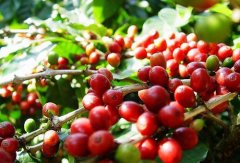
Guadeloupe Coffee Good coffee production affected by natural disasters
Good coffee production is affected by natural disasters This group of islands in the Caribbean used to be an important source of coffee. In 1789, more than 1 million coffee trees on 500 hectares produced 4000 tons, while today only 150 hectares are used for coffee cultivation. This decline can be attributed to increased sugar cane and banana production and Hurricane Ines in 1996.

Guadeloupe used to be the best producer of coffee.
Good coffee production has been affected by natural disasters this group of islands in the Caribbean used to be an important producer of coffee. In 1789, more than 1 million coffee trees on 500 hectares of land produced 4000 tons. Today, only 150 hectares of land is used to grow coffee. This decline can be attributed to the increase in sugar cane and banana production and the impact of Hurricane HurricaneInes in 1996.
A brief introduction to the treatment method of grinding degree and baking degree of citrus sour Bolivian snow vein manor coffee
The legal capital, the seat of the Supreme Court, with a population of 284000, 2790 meters above sea level. Founded in 1538, the city was formerly known as Chuquisaka. The city witnessed the first uprising in South America against Spanish rule in 1809. Bolivia declared its independence here in 1825 and became the capital in 1826. In 1839, it was renamed Sucre to commemorate the second president of Bolivia, General Antonio Jos é Sucre.
Bourbon characteristics of the History of Coffee cultivation in El Salvador, the birthplace of Pacas Pacamara Coffee beans
Position in the world as a coffee exporter (19gam20): sacks exported annually on the 19th (60kg) (19gam20): about 546000 percentage of the world coffee market: less than 1 per cent of other major agricultural exports: typical varieties of sugar, corn, rice, beans: bourbon, Pacas, Pacamara, Kaddura and Katuai major coffee producing areas

Panamanian Coffee Flavor with elegant Flavor; an introduction to the Jadeite Manor
The Panamanian National Assembly is a unicameral system that exercises legislative power. It is composed of 70 members who are directly elected for a term of five years. The current parliament was formed on July 1, 2009, and the seats occupied by various parties are as follows: Democratic change Party (member of the ruling coalition) 36 seats, Democratic Revolutionary Party 17 seats, Panamanian Party 12 seats, Nationalist Republican Freedom Movement Party (ruling coalition member) 4 seats, people's Party 1

Introduction to Cedar Motad Manor Coffee, which tastes close to floral flavor and taste.
In July 1991, EGF hosted a national conference with the participation of more than 20 political and ethnic organizations. The meeting adopted the Transitional Charter and elected an 87-member House of Representatives, with EGF Chairman Meles Zenawi as President of the Transitional Government and President of the House of Representatives. A transitional government was established. On May 24, 1993, Eritrea (formerly the province of Eritrea, Ethiopia) adopted
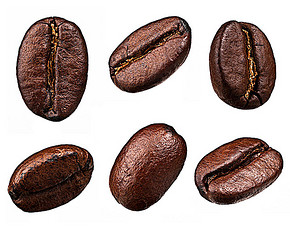
Guatemala coffee growing area cultivation grade flavor introduction
Pay attention to coffee reviews (Weixin Official Accounts vdailycom ) and discover a beautiful cafe to open its own small shop Coffee history In the 1850s, coffee was brought to Guatemala by missionaries. In the 19th century, with the invention of synthetic dyes in Europe, Guatemala's original important export products, indigo (indigo, a plant dye) industry was hit, coffee gradually became an important export, coffee

Introduction to the characteristics of the Flavor and Taste Manor of Jamaican boutique Blue Mountain Coffee
Arthur Philip (Arthur Phillip), the first consul of New South Wales, thought it was the best place for a government supply depot when he first saw Blue Mountain. Later, Gidley King built a prison in the Blue Mountains in 1799, dominated by Irish and Scottish political prisoners, and the scenery can still see Vito, the highest peak of the Blue Mountains.